The Challenges of Microfinance: Understanding Barriers, Solutions, and the Role of Technology
Microfinance has long been recognized as a powerful instrument for poverty alleviation and financial inclusion. By providing small loans, savings facilities, insurance, and other financial services to low-income individuals, microfinance institutions (MFIs) aim to empower underserved communities, promote entrepreneurship, and foster economic development. However, despite its noble objectives and widespread adoption, the challenges of microfinance remain significant and complex.
In recent years, the microfinance sector has experienced both rapid growth and serious criticism. While millions have benefited from access to credit, others have faced issues such as debt traps, high interest rates, limited financial literacy, and operational inefficiencies. These problems highlight the urgent need to address the structural and systemic hurdles facing the industry.
This article explores the challenges of microfinance in depth, analyzing their causes, consequences, and possible solutions. It also examines how technology, especially microfinance software and microfinance software in India, is playing a transformative role in overcoming these challenges and creating a more transparent, efficient, and inclusive financial ecosystem.
Understanding Microfinance and Its Core Purpose
Before diving into the challenges of microfinance, it is essential to understand what microfinance truly represents. Microfinance refers to the provision of financial services—such as small loans, savings, insurance, and payment facilities—to individuals who lack access to traditional banking systems. These individuals often belong to low-income or rural communities and typically do not possess formal employment records or collateral.
The core purpose of microfinance is not merely profit generation but social impact. It aims to:
- Reduce poverty
- Promote entrepreneurship
- Support women empowerment
- Encourage self-employment
- Strengthen rural economies
While the vision is inspiring, the execution often faces multiple barriers that hinder its effectiveness.
Also read: Why Microfinance Is Key to Building a Stronger Rural Economy
The Challenges of Microfinance in Today’s Economic Landscape
Despite its rapid expansion, the challenges of microfinance are persistent and multifaceted. These challenges affect borrowers, institutions, investors, and regulators alike.
1. High Interest Rates
One of the most debated challenges of microfinance is the high interest rate charged by many MFIs. Although microloans are small, the cost of servicing them is high due to operational expenses, field visits, documentation, and risk management. As a result, interest rates often exceed those of traditional banks.
High interest rates can burden borrowers, sometimes pushing them into cycles of debt. For low-income families, even a small increase in interest can significantly impact their financial stability.
2. Risk of Over-Indebtedness
Over-indebtedness is a critical concern in the microfinance sector. In regions where multiple MFIs operate, borrowers often take loans from several institutions simultaneously. This leads to excessive borrowing and eventual repayment difficulties.
Without proper credit assessment systems and borrower profiling, MFIs struggle to detect multiple borrowings. This makes the challenges of microfinance even more severe, especially in rural and semi-urban areas.
3. Lack of Financial Literacy
A major contributor to repayment issues is limited financial literacy among borrowers. Many beneficiaries do not fully understand loan terms, interest calculations, repayment schedules, or financial planning.
This lack of awareness results in poor money management, misuse of funds, and default risks. Financial literacy programs are essential, but implementing them at scale remains a significant operational challenge.
4. Operational Inefficiencies
Traditional microfinance operations are highly labor-intensive. Manual processes such as loan documentation, customer onboarding, repayment tracking, and reporting consume considerable time and resources.
Without automation, MFIs face higher costs, data errors, delays, and inefficiencies. This is where microfinance software becomes essential, offering automation, data accuracy, and operational scalability.
5. Limited Access to Capital
Many microfinance institutions rely on external funding from banks, investors, and donors. However, inconsistent cash flows, regulatory compliance, and economic fluctuations often limit access to affordable capital.
Funding constraints directly impact loan disbursement capacity, outreach expansion, and sustainability. This creates a vicious cycle that reinforces the challenges of microfinance.
6. Regulatory and Compliance Burdens
Regulatory frameworks for microfinance vary across countries and regions. In India, MFIs must comply with strict guidelines set by the Reserve Bank of India (RBI) and other authorities.
While regulation ensures borrower protection and institutional stability, compliance can be expensive and complex, especially for small MFIs. Regulatory reporting, audits, and documentation significantly increase administrative burdens.
7. Loan Recovery and Default Risks
Loan recovery remains one of the toughest operational challenges. Borrowers often face unpredictable income due to seasonal employment, crop failure, illness, or natural disasters.
High default rates can threaten institutional sustainability and investor confidence. Without predictive analytics and robust monitoring tools, managing credit risk becomes extremely difficult.
8. Technological Gaps in Rural Areas
While technology offers solutions, limited digital infrastructure in rural regions poses obstacles. Poor internet connectivity, low smartphone penetration, and lack of digital literacy hinder the adoption of digital tools.
However, advancements in mobile-based platforms and offline-enabled microfinance software in India are gradually bridging this gap.
Social and Ethical Concerns: A Deeper Look at the Challenges of Microfinance
Beyond operational issues, the challenges of microfinance also extend to social and ethical dimensions.
1. Pressure on Borrowers
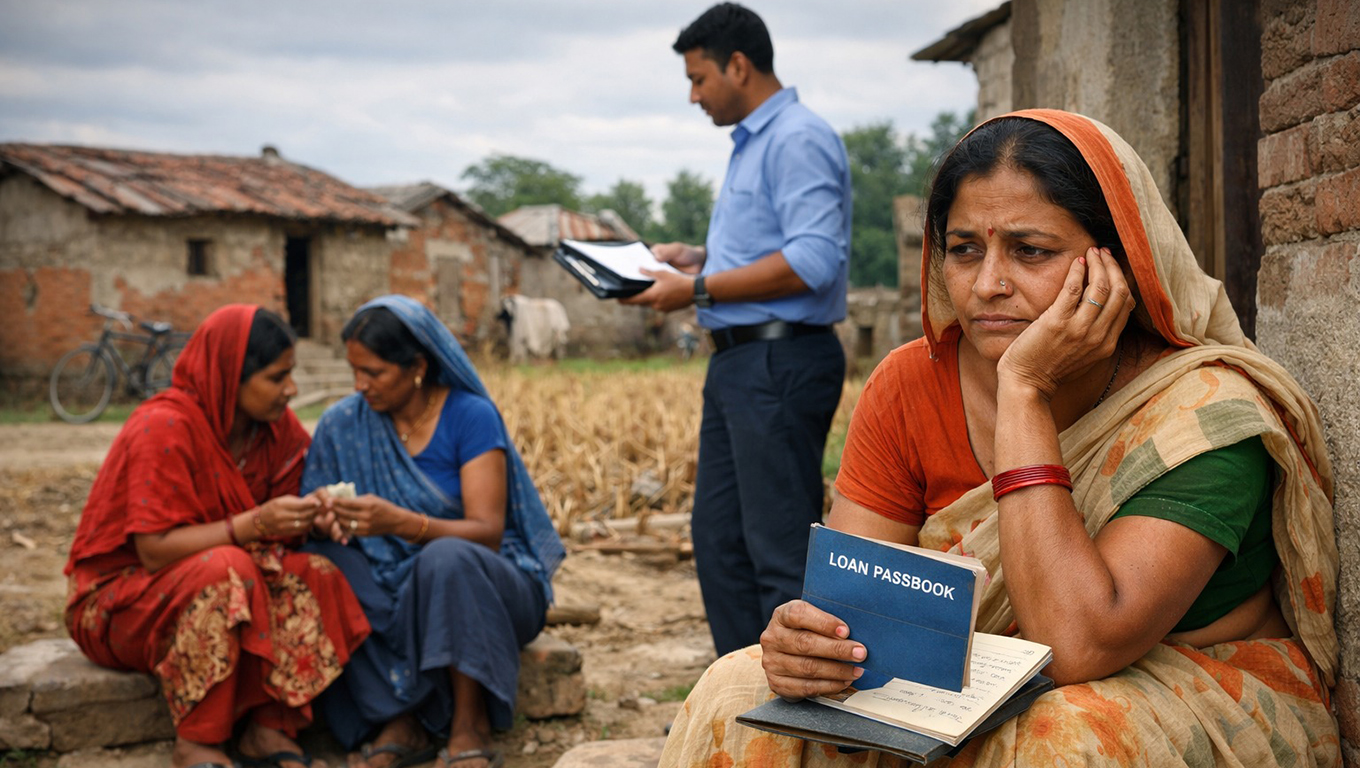
Aggressive recovery practices, peer pressure in group lending, and social stigma associated with default can negatively affect borrowers’ mental well-being.
In extreme cases, these pressures have led to severe psychological distress. Ethical lending practices and borrower-centric policies are crucial to addressing these concerns.
2. Gender Inequality and Cultural Barriers
Although microfinance is widely associated with women empowerment, cultural barriers often limit women’s decision-making power. In some households, male family members control loan utilization, defeating the purpose of financial inclusion.
This highlights the need for gender-sensitive policies and community engagement programs.
The Role of Technology in Addressing the Challenges of Microfinance
Technology has emerged as a powerful enabler in tackling the challenges of microfinance. Advanced microfinance software solutions streamline operations, enhance transparency, and improve customer experience.
1. Automation of Loan Processes
Modern microfinance software automates loan application, approval, disbursement, and repayment tracking. This reduces paperwork, minimizes human error, and speeds up processing times.
2. Real-Time Data and Analytics
Data-driven insights help MFIs assess borrower risk, track repayment patterns, and forecast financial performance. Predictive analytics allows early detection of potential defaults, improving portfolio quality.
3. Digital Payments and Collections
Mobile wallets, UPI payments, and digital collection systems simplify repayment processes. These innovations reduce cash handling risks and enhance transparency.
4. Compliance and Reporting Automation
Automated regulatory reporting ensures timely compliance with statutory requirements. This significantly reduces administrative workload and compliance risks.
5. Scalability and Outreach Expansion
With cloud-based microfinance software in India, MFIs can scale operations rapidly without significant infrastructure investment. This enables outreach to remote and underserved communities.
Recommended Read: How Does Micro Loan Management Software Improve Lenders’ Profitability?
Microfinance Software in India: Driving Digital Transformation
India is one of the largest microfinance markets in the world. With millions of borrowers across rural and semi-urban regions, the demand for efficient microfinance software in India is rapidly increasing.
Indian MFIs face unique challenges such as high population density, diverse borrower profiles, multilingual operations, and strict regulatory oversight. Advanced software solutions address these complexities through:
- Multi-branch management
- Multi-language support
- Aadhaar-based KYC integration
- Real-time reporting dashboards
- Mobile field officer applications
By adopting modern microfinance software, Indian MFIs are overcoming operational bottlenecks and improving service delivery.
Future Outlook: Overcoming the Challenges of Microfinance
The future of microfinance depends on innovation, ethical practices, and technological integration. Addressing the challenges of microfinance requires a holistic approach that includes:
- Financial literacy programs
- Borrower-centric loan products
- Responsible lending practices
- Digital transformation
- Regulatory collaboration
By combining social objectives with technological efficiency, microfinance institutions can achieve sustainable growth while maximizing social impact.
How Microfinance Software is Transforming the Sector
Advanced microfinance software is revolutionizing how MFIs operate. Key benefits include:
- Faster loan approvals
- Reduced operational costs
- Improved portfolio management
- Enhanced customer engagement
- Better risk mitigation
These advantages make software adoption not just beneficial but essential for long-term success.
The Strategic Importance of Choosing the Right Technology Partner
Selecting the right technology provider is crucial in overcoming the challenges of microfinance. A reliable partner offers customized solutions, ongoing support, data security, and continuous innovation.
This is where experienced providers like GTech Web Solutions stand out in the competitive landscape of microfinance software in India.
Why GTech Web Solutions is the Best Microfinance Software Provider in India
When it comes to addressing the challenges of microfinance through technology, GTech Web Solutions emerges as a trusted and innovative partner.
Key Reasons to Choose GTech Web Solutions:
- Industry Expertise: Deep understanding of microfinance operations and regulatory requirements.
- Customized Solutions: Tailored microfinance software designed to meet the unique needs of each institution.
- Advanced Features: Automated loan management, digital collections, real-time analytics, and compliance reporting.
- Scalable Architecture: Solutions that grow alongside your organization.
- Reliable Support: Dedicated technical assistance and regular updates.
As a leading provider of microfinance software in India, GTech Web Solutions empowers MFIs to streamline operations, reduce risks, and maximize social impact. Gtech websolution is one of th e most trusted microfinance software prover all over india.
Conclusion
While microfinance has transformed millions of lives, the challenges of microfinance remain significant and complex. High operational costs, borrower over-indebtedness, regulatory pressures, and technological limitations continue to hinder the sector’s full potential.
However, the integration of advanced microfinance software is reshaping the industry. Especially in a dynamic market like India, adopting reliable microfinance software in India is essential for sustainable growth.
For MFIs seeking a dependable technology partner, GTech Web Solutions stands out as the best microfinance software provider in India, delivering innovative, scalable, and secure solutions that drive efficiency and social impact.
By embracing digital transformation and ethical practices, the microfinance sector can overcome its challenges and continue its mission of empowering communities and fostering inclusive economic development.